
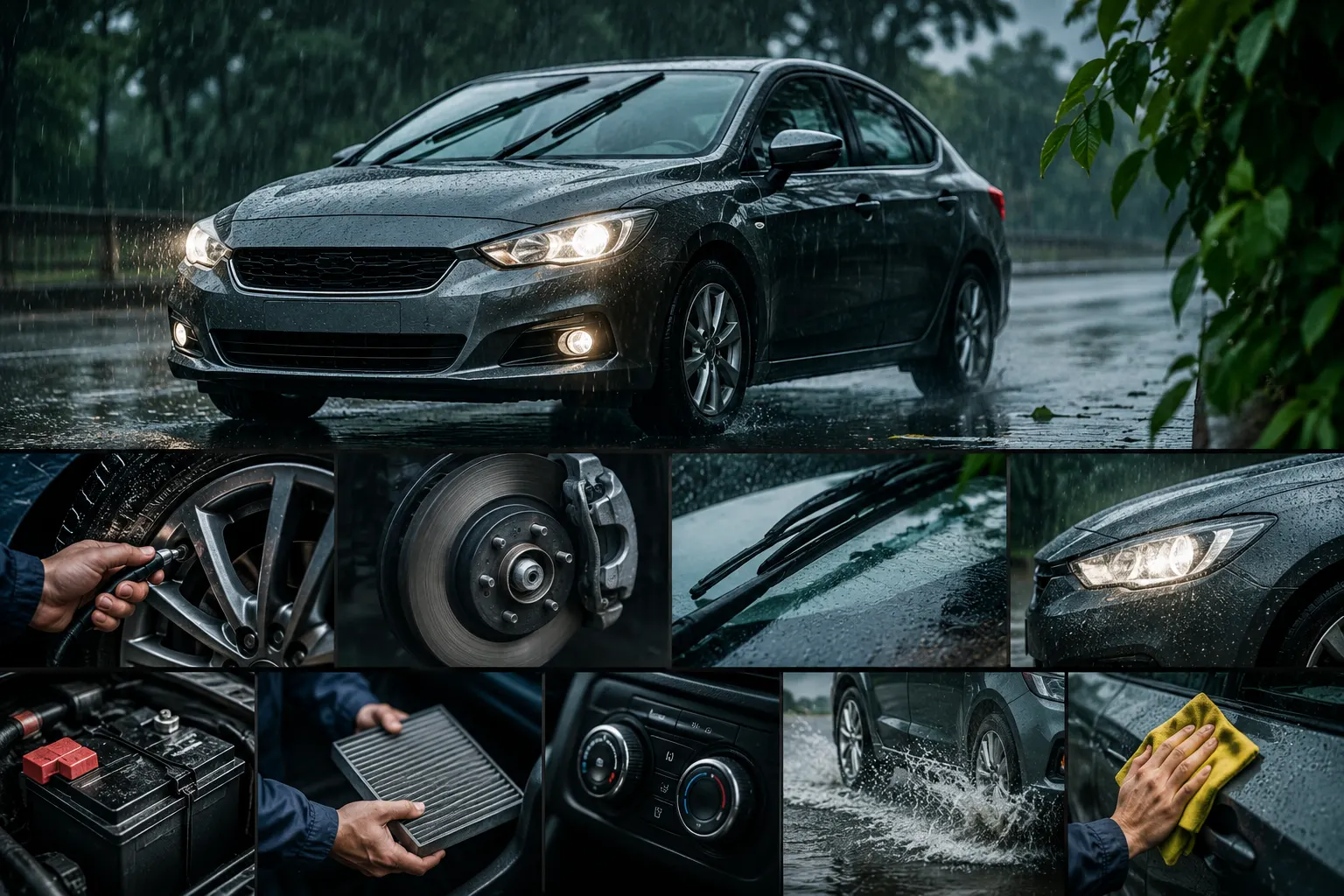
Does your car have sufficient capabilities for dealing with heavy rain, wet roads, and waterlogged streets this monsoon? The downpour can pose some problems to car owners. All the needed components of a vehicle can be impacted by water, mud, moisture, and poor visibility. Some simple preparation and precautions before and during the rainy season will help to ensure your car remains safe and comfortable. There are also simple checks you can make to detect problems early and avoid expensive repairs. Every component from tyres to brakes, from wipers to lights and the battery, must be attended to. This guide covers some of the practical tips of monsoon car care that are useful for every car owner and help them drive safely and smoothly through the monsoon season.
Check Your Tyres Before Driving
Tyres can be a key factor on wet roads. Rainwater makes tyres more slippery on the road, particularly if the tread is worn down.
Before the monsoons start to pour in, inspect the tread depth. Check for uneven wear, cracks, or visible damage. Make sure of the tyre pressure as well and keep the pressure as the vehicle manufacturer specifies.
Don’t overlook the spare tyre. If you experience a puncture while driving in the rain, a spare that’s inflated to the correct pressure may come in handy.
Inspect the Brakes Carefully
Roads can be slippery during wet weather, which can make it harder to brake. Rain is a situation that should not cause any issues with your brakes.
Be mindful of any unusual noise, vibrations, or brake changes. If the brake pedal is not normal, or if the vehicle may take longer to stop, have the braking system inspected by a competent mechanic.
Include checking brake fluid when maintaining the vehicle as well. Do not overlook any warnings of a brake problem.
Keep Windshield Wipers in Good Condition
In heavy rain, good visibility becomes a necessity. If your wipers are worn, they leave streaks of water on the windshield and make it more difficult to see the road.
Inspect blades for cracks, stiffness, or wobbling. Replace any damaged blades as needed. Caution: Make sure the windshield is kept clear, as dust and oil will make it harder to see through when it rains.
Also, be sure to keep the washer fluid reservoir topped off. In case of an emergency, clean water will help, but in emergencies, appropriate windshield washer fluid will clean better.
Check Headlights and Other Lights
Oftentimes, when it rains, visibility is low for drivers and pedestrians. Properly functioning lights allow you to see the road and make you more visible to others.
Inspect headlights, brake lights, indicators, and parking lights. Change any defective bulbs as soon as they are discovered.
Remove dirt from light covers, as dirt can cause loss of light output. Don’t use high-beam lights when it’s raining, as they can be reflected off of raindrops, making it harder to see.
Protect the Battery and Electrical Parts
Electrical connections can be adversely affected by moisture, particularly when the vehicle’s wiring is exposed or damaged. Inspect battery terminals for corrosion and ensure battery connections are secure.
Starting may be an issue with a weak battery in the monsoon. If the battery has a problem starting the car, get a mechanic to inspect it.
Avoid ignoring issues like flickering lights, strange dashboard messages, or bad switches. Addressing these early will help prevent larger issues.
Keep the Air Conditioning System Working
To avoid windshield fogging on rainy days, many drivers use the air conditioner. A working air conditioning system allows for good visibility.
Test the moisture removal capacity of the AC. Replace the cabin air filter when necessary – a dirty filter can impede airflow.
Clear the windshield using the defogger when it gets foggy due to windshield misting. If fogged glass obscures your view, do not continue driving.
Avoid Driving Through Deep Water
Watery roads may not show any cracks, drains, damage to the road, or any other hazards. Determine the depth of the water, and do not enter a flooded area unless you are sure you can cross safely.
If water seems too deep, then go an alternate way. Never follow another vehicle blindly, as they may not be as large or have as much ground clearance as you.
Slowly pass through low water if conditions permit and don’t accelerate quickly. Slowly apply the brakes in a safe place after passing through water to assist in returning normal braking response.
Keep the Car Clean During the Monsoon
The mud and dirty water may pool around the wheels, underbody, and lower parts of the car. Cleaning regularly can help to remove this buildup.
Be sure to check the underbody, as dirt can collect and trap moisture there. If possible, clean the car after driving through mud or flooded areas.
If water gets into the cabin, dry the inside with a towel. Remove and dry wet mats to avoid having too much dampness.
Park Your Car Carefully
Car care can also be impacted by the monsoons, depending on where you park. Avoid areas that regularly collect water, especially when heavy rain is expected.
Whenever possible, use a covered and well-ventilated parking space. Don’t park under any weak trees or structures that can become dangerous during heavy storms.
When parking outside, ensure that windows are closed and doors and the boot close tightly.
Conclusion
There are no complicated steps to monsoon car care tips. Regular inspection of tyres, brakes, wipers, lights, fluids, battery, and seals will help your vehicle get through the rainy season better. Keep shallow water, maintain good visibility, and deal with warning signs early. These are some easy things you can do that can help you drive safely and comfortably during rainy weather. EasyLives can also provide practical vehicle care assistance.
FAQs
Before the heavy rain, inspect tires, brakes, wipers, lights, battery, fluid, and AC system, as well as rubber seals.
Regularly inspect tyre pressures, especially before long journeys. Use the pressure that your vehicle manufacturer recommends.
If you can, steer clear of flooded roads. Water may conceal potholes and drains and can get into vital vehicle parts.
The rain makes moisture accumulate around the car and can fog the glass. To clear the fog, use the “AC and defog” function to improve visibility.
Regular cleaning removes moisture, mud, and dirt from the body and underbody. Thoroughly clean the vehicle when a lot of dirt accumulates.