
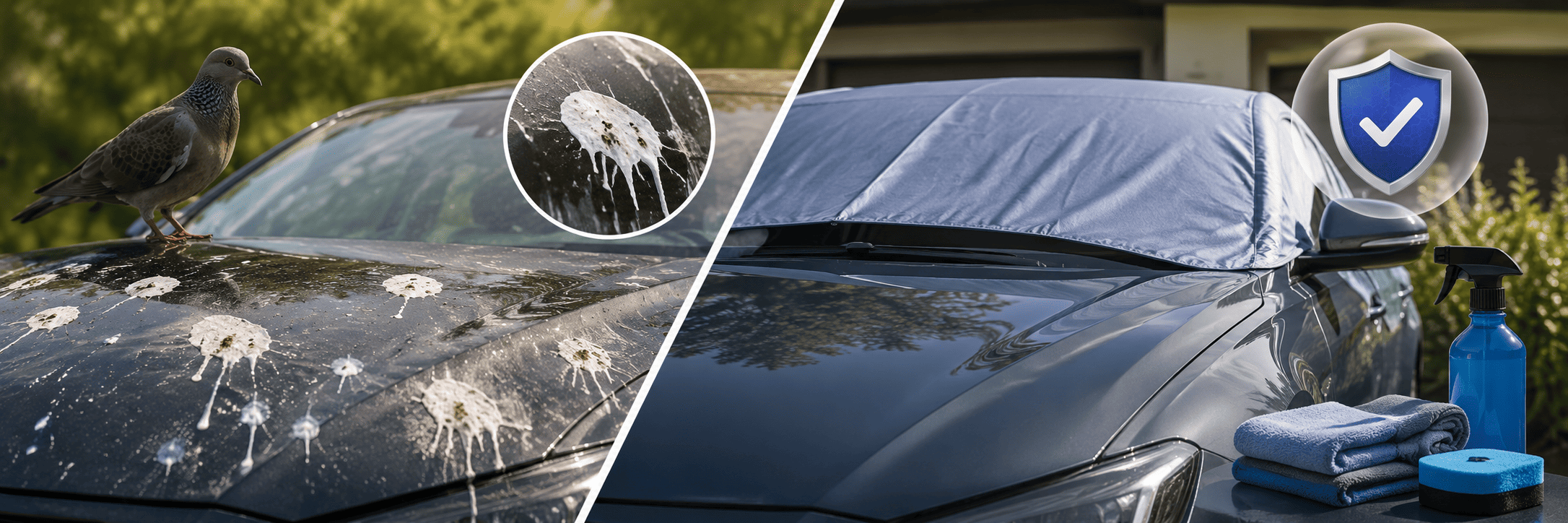
Bird droppings on your car appear to be a small problem but actually represent one of the most destructive things that can damage your car’s exterior. Many car owners tend to ignore them for a few hours or even days, assuming they can be cleaned later. However, even a short delay can lead to permanent damage to your car’s paintwork. To keep your vehicle looking good and maintaining its value, you need to learn about the damaging effects of bird droppings and their impact on your vehicle and the correct methods for dealing with them.
Why Bird Droppings Are So Harmful
Bird droppings have more harmful properties than regular dirt because their acidic content makes them dangerous for surfaces. The pH level of bird droppings typically falls within the 3 to 4.5 range, which gives them corrosive properties. The droppings start to react with the vehicle’s clear coat, which serves as the protective layer for its paint.
Bird droppings contain uric acid together with tiny solid materials that include grit and seeds. Dried droppings become hard and smaller, which causes them to create a tightening effect on the paint surface. The combination of acid and physical contraction makes them exceptionally damaging.
Effects on Your Car’s Exterior
1. Paint Etching: Etching represents a common result that occurs from this problem. The acid in bird droppings starts to dissolve the clear coat when the droppings remain on your car during extended periods. Over time, this creates dull spots or marks that cannot be removed by a simple wash. In severe cases, it can even penetrate deeper into the paint layers.
2. Permanent Stains: Bird droppings create persistent stains if their presence remains untouched for an extended period. The stains make your car’s paintwork appear uneven because they change both its color and texture.
3. Clear Coat Damage: The clear coat is designed to protect your car’s paint from environmental damage. Bird droppings weaken this layer, reducing its effectiveness. Once the clear coat is compromised, your car becomes more vulnerable to UV rays, dust, and pollution.
4. Increased Risk Under Sunlight: Heat accelerates the damage. Bird droppings become more difficult to remove when your car is parked in direct sunlight because the droppings solidify at a faster rate and the chemical process of solidification escalates in intensity. This method results in paint deterioration that occurs at a higher rate and reaches a greater degree of depth.
5. Impact on Resale Value: Visible paint damage, stains, or dull patches can significantly reduce your car’s resale value. The exterior of a property that receives proper care creates an appealing appearance that attracts prospective buyers.
Common Mistakes People Make
Delaying cleaning: Waiting too long allows the acid to settle and damage the paint.
Dry wiping: Trying to remove dried droppings with a dry cloth can cause scratches.
Using harsh chemicals: Strong cleaners can further damage the paint instead of protecting it.
How to Safely Clean Bird Droppings
1. Act Quickly: You should clean the droppings at the earliest possible time because it provides the best results. Fresh droppings are easier to remove and less likely to cause damage.
2. Soften Before Cleaning: Never scrub dry droppings. Use water or a damp microfiber cloth to soften them first. The residue needs to be allowed to loosen up for a one-minute period.
3. Use a Microfiber Cloth: A good-quality microfiber cloth is gentle on the surface and prevents scratches while cleaning.
4. Use pH-Neutral Car Shampoo: Avoid household cleaners. Always use a car shampoo that is designed to be safe for automotive paint.
5. Dab, Don’t Rub: You should gently dab the area instead of using forceful rubbing motions. This method lowers the possibility of creating swirl marks and scratches.
How to Protect Your Car
1. Regular Washing: Frequent cleaning helps remove contaminants before they cause damage. This is especially important in cities with high dust and pollution.
2. Waxing and Sealants: Applying wax or paint sealant creates a protective layer over your car’s paint. The treatment creates a protective barrier that minimizes bird contact with the car’s exterior at direct points.
3. Ceramic Coating: The ceramic coating system creates a stronger protective barrier that lasts for extended periods. The system prevents contaminants from adhering to surfaces and enables easier removal of these contaminants.
4. Covered Parking: You should select covered parking spaces, which protect your vehicle from potential bird droppings that may occur near tree areas.
5. Professional Doorstep Cleaning: The service of professional doorstep car cleaning provides necessary vehicle maintenance through appropriate products and methods that should be used to maintain your vehicle. The solution works best for car owners who have busy schedules.
Final Thoughts
Bird droppings become more than an unpleasant sight because they create dangerous problems that damage your vehicle’s exterior. The problem needs immediate attention because it causes permanent paint damage and decreases shine, which results in expensive repairs. Quick response with suitable cleaning methods and routine maintenance functions as the main solution.
A properly maintained vehicle maintains its visual appeal while preserving its resale value throughout the years. Your vehicle’s exterior will remain in great condition when you perform basic tasks, which include immediate vehicle cleaning and using correct equipment and protecting your vehicle with defensive coatings.