
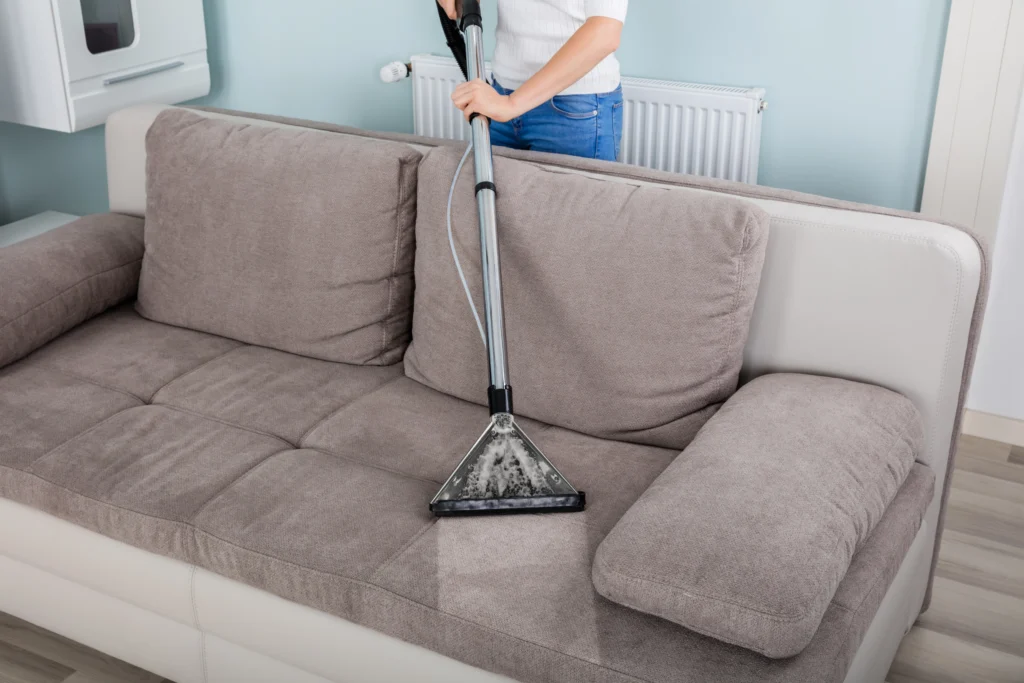
Have you ever wondered whether your dirty sofa could affect your family’s health? A sofa may look clean while holding dust, food crumbs, pet hair, pollen, and other particles deep inside its fabric. Since family members often spend hours sitting or sleeping on sofas, these hidden particles can become a regular source of exposure. The risk becomes more important for people with allergies or asthma. The good news is that regular cleaning can reduce dust and allergen build-up. Understanding what a dirty sofa can hold helps you decide when it needs proper cleaning.
What Can Build Up Inside a Dirty Sofa?
Sofas collect much more than visible dirt. Every day, people shed skin flakes, bring dust indoors, and leave small particles on the upholstery. Food crumbs can also fall between cushions and remain unnoticed for long periods.
According to the US Environmental Protection Agency, biological contaminants found indoors can include dust mites, pet allergens, pollen, mould, bacteria, and other particles. Fabric-covered furniture can collect some of these contaminants over time.
A sofa can also collect pet dander and hair. Families with dogs or cats may notice more visible hair, but tiny allergen particles can remain in the fabric even when the sofa looks tidy.
How Can Sofa Dust Affect Breathing?
A dirty sofa can contribute to indoor exposure to allergens, especially when people sit down, shake cushions, or move across the fabric. These actions can disturb settled dust and send some fine particles back into the air.
The EPA notes that dust mites live in places such as upholstered furniture, carpets, pillows, and bedding. Their body parts and droppings can trigger asthma symptoms in people who are sensitive to them.
This does not mean that every dirty sofa will make a person sick. The effect depends on the particles present and a person’s sensitivity. However, regular cleaning can help reduce unnecessary exposure.
Can Dirty Sofas Trigger Allergies?
Yes, dirty upholstery can hold common allergens that may trigger symptoms in sensitive people. These symptoms may include sneezing, a runny nose, itchy eyes, coughing, or breathing discomfort.
Pet allergens deserve attention because they can remain in upholstered furniture. The EPA recommends regular vacuuming of fabric-covered furniture to reduce dust and allergen build-up.
People who already have allergies or asthma may need to pay more attention to sofa hygiene. Cleaning does not guarantee that all allergens disappear, but it can lower the amount of accumulated dust.
Why Is Moisture on a Sofa a Concern?
Moisture can make sofa hygiene more difficult. A wet sofa that does not dry properly can create conditions that support mould and other biological growth.
The EPA explains that damp materials and wet surfaces can support the growth of mould, bacteria, and other biological contaminants. It also recommends controlling indoor moisture and drying wet areas properly.
A spill should therefore receive attention quickly. Simply covering a damp cushion may trap moisture inside and delay drying.
Can Food Crumbs Make a Sofa Unhygienic?
Food crumbs may seem harmless, but they can collect deep between cushions. These crumbs can attract insects and other pests when people leave them for long periods.
Regular vacuuming helps remove crumbs, dust, hair, and other debris from upholstery. Cleaning should also reach gaps between cushions because visible surface cleaning cannot remove everything.
For a busy family, sofa cleaning in Gurgaon deserves the same regular attention as other frequently used fabric surfaces.
How Often Should You Clean a Sofa?
There is no single cleaning schedule that suits every home. A sofa cleaned used daily by several family members may need more frequent cleaning than one used occasionally.
Homes with pets, young children, or family members with allergies may need more regular attention. The EPA recommends routine vacuuming of upholstered furniture as part of indoor air quality care.
Before using a cleaning product, check the sofa manufacturer’s care instructions. Some fabrics can react badly to excess water or unsuitable chemicals.
For families looking for practical home cleaning support, Easy Lives can help maintain cleaner and more comfortable living spaces.
What Is the Best Way to Keep a Sofa Cleaner?
Start with regular vacuuming. Clean the surface, cushions, seams, and areas underneath the cushions. Remove crumbs and visible debris instead of allowing them to build up.
Clean spills promptly and allow damp areas to dry completely. Do not use a strong cleaning chemical simply because the sofa looks heavily stained. Always follow the fabric care instructions.
People with allergies or asthma should avoid the area during heavy vacuuming because cleaning can temporarily stir up fine particles. The EPA suggests that sensitive people let someone else vacuum or use a HEPA-filtered vacuum where appropriate.
Conclusion
A dirty sofa can collect dust, allergens, pet dander, crumbs, and moisture that may affect indoor comfort, especially for sensitive family members. Regular vacuuming, prompt spill cleaning, and proper drying can reduce build-up. Pay extra attention to frequently used sofas and follow fabric care instructions. For dependable home cleaning support, consider services from Easy Lives for a cleaner living environment.
FAQs
A dirty sofa can collect dust, dust mites, pet allergens, and pollen. These particles may trigger allergy symptoms in sensitive people.
Yes, dust mites and other allergens found in upholstered furniture can trigger asthma symptoms in people who are sensitive to them.
Regular vacuuming can reduce dust and allergen build-up, although it may not remove every allergen from deep inside upholstery.
Moisture can create conditions that support mould growth. Dry wet upholstery properly and address water damage quickly.
Pet hair and dander can collect on fabric furniture. Regular cleaning can help reduce the amount of allergen build-up.
Children who are sensitive to dust mites, mold, or pet allergens may experience symptoms when exposed to these triggers.
Vacuum regularly, clean spills quickly, remove crumbs, follow the fabric care label, and keep upholstery dry. Regular maintenance helps control dust and other indoor contaminants.