
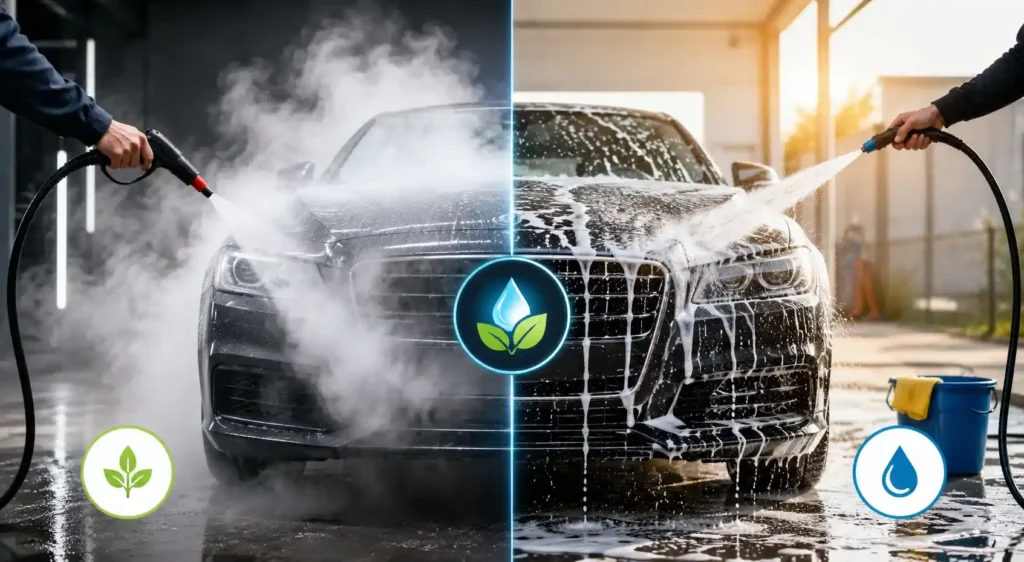
Steam Car Wash vs Water Car Wash has become one of the most debated topics among car owners looking for a safer, more eco-friendly way to maintain their vehicles. Steam washes are often promoted as the environmentally friendly, scratch-free alternative to the traditional bucket-and-hose method, but does the hype really hold up beyond the marketing? This guide takes an honest look at both options—what they do well, where they fall short, and which one offers the best value for your car, your budget, and the environment.
What Is a Steam Car Wash?
Rather than relying on a strong flow of water, a steam vehicle wash uses high-temperature, low-pressure steam vapour to clean the vehicle effectively. It consumes very little water—generally just one or two litres for the entire car—making it an environmentally responsible choice, especially in regions facing water shortages. As a result, Steam Car Wash in Gurgaon has become increasingly popular among car owners looking for a sustainable and efficient cleaning solution. It’s also widely preferred for interior cleaning, as the steam can reach vents, seams, and upholstery in ways that a traditional hose simply cannot.
What is a water car wash?
This is how most of us were taught – hose, pail of soapy water, sponge or wash mitt and a nice rinse at the end. It uses volume and pressure to physically pull dirt off the surface, sometimes with the help of a pressure washer for harder filth like mud or road tar. It’s been the industry standard for decades since it works dependably across every form of grime, from light dust to caked-on mud after a rainy drive.
Water washes normally take between 100 and 150 litres per car, depending on the depth of the clean and the usage of a pressure washer. The main downside to this strategy is the amount of water it uses, particularly since towns worldwide are imposing stricter water restrictions in the summer months.
Cleaning Effectiveness: Which Wins Where
Neither way is preferable – it all depends on what you’re cleaning off. Here’s how they compare against various types of filth and grime:
-
- Light dust and surface dirt: Steam works well here, the heat loosening dust without much physical scrubbing, and it’s easier on the paint, too.
-
- Heavy mud or caked on filth, such as after monsoon driving: Traditional water cleaning is best here. Steam just does not have the volume and pressure to effectively move thick, dried muck. And pushing it typically means running over the same location again and wasting time.
-
- Interior cleaning – seats, dashboard, AC vents Steam does a great job here.
Bug residue and tar marks on front bumper: A pre-treatment agent for persistent residue is necessary with both approaches, but often water cleaning with a good wash mitt gets the job done quickly.
Paint and Finish Effect
This is where the steam car wash vs water car wash argument becomes very fascinating. A bad water wash—using a dry sponge, recirculating unclean water, or exerting too much pressure from a jet—may leave small scratches known as swirl marks, particularly on dark-colored vehicles where they are more noticeable. Steam, on the other hand, requires far less physical contact and has a lower chance of causing these marks, which is one of the reasons why professional detailers often prefer it for regular maintenance. This growing preference has also contributed to the increasing demand for steam car washes in Gurgaon, especially among car owners who want to protect their vehicle’s paint while maintaining a premium finish.
That said, a water wash done correctly using the two-bucket approach, a clean microfibre cloth, and gentle motion is just as safe for your paint as steam. The problem with water washing is not the water but the sloppy approach. Worn-out brushes in automated roadside washes are considerably more likely to cause harm than a meticulous manual wash using buckets and a hose.
Cost And Ease
Steam washes tend to be more expensive per wash because the equipment requires a higher initial investment for the service provider, and the process demands more hands-on time and expertise. However, many customers still prefer a steam car wash in Gurgaon for its eco-friendly approach, superior detailing, and paint-safe cleaning. For high-volume service centres that wash dozens of vehicles each day, a quick water wash often remains the fastest and most cost-effective option.
If convenience is your priority, a traditional water wash is often the better choice, especially if you want a quick, thorough clean and don’t mind using more water. This is why Water Car Wash in Gurgaon continues to be a popular option for car owners looking for fast, efficient, and cost-effective vehicle cleaning. Steam cleaning, on the other hand, is preferred by those who want a scratch-free finish, are willing to spend a little more, and don’t mind waiting slightly longer for a premium detailing experience.
So Which One Should You Go For?
To be honest, for most drivers, the greatest option is a mix of both, rather than one or the other. If your automobile usually takes up dust and light filth while city driving, steam washing is the way to go for routine maintenance cleaning. Every few weeks, or after a trip through dirt, monsoon puddles, or dusty construction regions, switch to a real water wash when steam alone won’t cut it.
If you care about conserving water and your automobile isn’t covered in a lot of heavy dirt, it makes sense to mostly rely on steam cleaning. If you do normal off-road-adjacent stuff, or if you need your undercarriage fully cleaned out, don’t forgo the usual wash simply because steam sounds trendier. The correct answer truly relies more on your driving circumstances than whatever strategy is absolutely “better.”
Final thoughts
There is no single winner here; steam car wash vs water car wash are just suited to various duties. Steam is kinder, better for light dirt, consumes a lot less water, and is great for cleaning interiors. When it comes to heavy mud, undercarriage cleaning, and using considerable pressure to displace stubborn dirt, water washing is still your best bet. Most drivers will find they obtain optimum results employing both ways, depending on what their vehicle truly requires that week, rather than making this a permanent either/or option.
FAQs
Yeah, the difference is really considerable: steam consumes a few litres per vehicle normally, a full hose-and-bucket wash may easily take over a hundred litres. That’s a lot over a year if you’re cleaning your vehicle every week.
It is very uncommon if the equipment is correctly calibrated and the operator understands what they are doing, but a steamer that is badly maintained and runs too hot for too long on one location might perhaps create problems.
Not always by myself. Dried bird droppings or sap are stubborn things that normally need some pre-treatment or moderate agitation first. Steam works best after that softening phase, not as the only option.
That frequently occurs when the tech didn’t go enough times on dustier panels or hurried through it. Steam is more about skill than physical force, so a rapid cleaning might leave behind a thin layer that a quick water washing wouldn’t.
It is not exaggerated but it is quite dependent on the setting. A plant that recycles and filters its wash water has a far lower impact than one that uses fresh water for every single vehicle with 0% reuse.